
Home > Yoga Types > Hatha Yoga > Article I
Hatha Yoga - Glory of The Nath Tradition
By Rishi Dharmachandra (Gandhar Mandlik) - Gandhar is a Electrical
engineer, and currently he is the course coordinator at Yoga Vidya Gurukul, he is
teaching and practicing yoga for the last 12 years. He was initiated in to Rishi
Sannayasa by his Guru Swami Niranjanananda Saraswati.
Hatha Yoga - Glory of The Nath Tradition - II
Ashtanga
yoga starts with Yama (social discipline - non-violence, truth, celibacy, non stealing,
non possessiveness) and Niyama (self discipline - purity, contentment, austerity,
self study, faith). Patanjali (founder of Ashtanga Yoga) was contemporary to Buddha
and his teachings show influence of Buddhist philosophy so ethics and morality along
is a starting point.
Interestingly Hatha Yoga do not start with Yama and Niyama. If you look at the ethics
and morality, they are nothing but higher values in life. These values should come
from within as transformations, but if you try to force yourself to follow these
then it creates more inner conflict than helping you on the higher path. Those who
try to follow them religiously and forcefully may find themselves in trouble creating
imbalance in their personality and losing peace of mind. Many religions have preached
these same values but how many people follow these guidelines? So if you want to
follow these self discipline and self control, you must prepare yourself.
Hatha Yoga approach is simple and logical. You must purify your body first, there
are 3 types of waste products in the body, mucus (kafa), gas (vata) and acidity
(pitta). Ayurveda says if these 3 types are balanced then perfect health can be
maintained. So Hatha Yoga recommends 6 cleansing techniques to balance this secretions
of the body. Neti (nasal cleansing), Dhauti (Internal cleansing), Basti (Yogic enema),
Nouli (Abdominal massage), Kapalbhati (Frontal brain cleansing), trataka (cleansing
of eyes) are 6 types recommended. When these 3 energies are balanced, all the systems
of the body like, respiratory, digestive, excretory, nervous system and other systems
work in prefect balance. As per Hatha Yoga, the cleansing techniques remove the
blockages in the nadis, these blockages create obstruction to the flow of prana
(vital force) and results in various physical and mental problems.
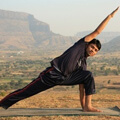
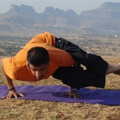
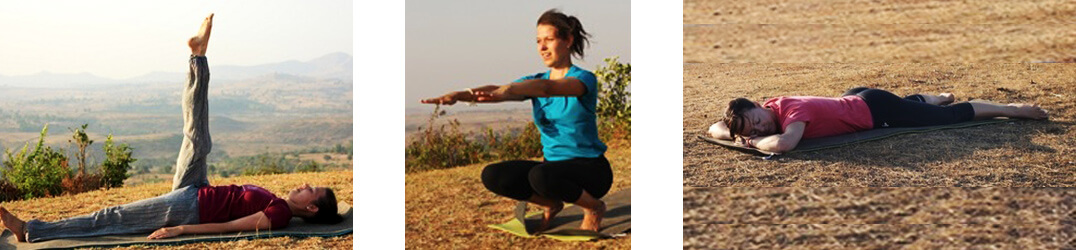
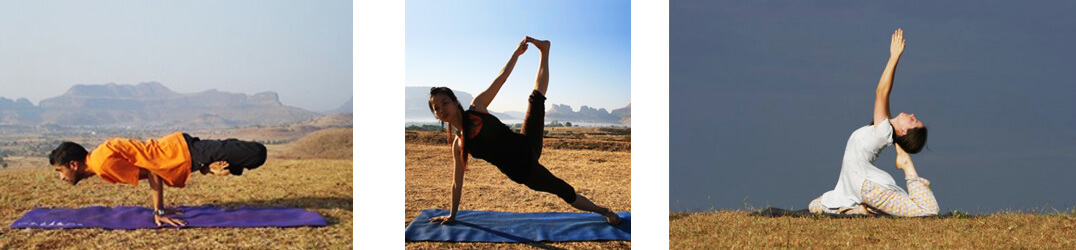
After the cleansing techniques, asanas are the first step in Hatha Yoga. The purified
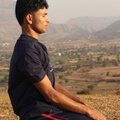
body is then subjected to discipline of asanas. Asana is a steady and comfortable
posture which is essential for meditation and higher practices. The sanskrit word
asana comes from the verb "asa" which means "to be established in".
So a body posture which is maintained for a long time can only be termed as "Asana".
These longer practice of postures balances prana (vital force) in the nadis.
In asanas you subject your body to different stretches and strains and then try
to maintain the posture in a relaxed manner. This practice builds the strength and
stamina in all parts of the body. Healthy and peaceful body is the starting point
for advance practices. This is the purpose of Asanas.
The next step is pranayama, which literally means control of prana (vital force).
Prana is the main force in the universe, all the actions is a result of prana. This
same energy also moves through body and mind. If one can control the prana then
all the functions of the body and mind can be controlled. So the purpose of pranayama
is to control this prana. With the practices of pranayama, all the chakras (psychic
energy centers) are purified and awakened. The sushumna nadi is awakened which is
the pathway for kundalini energy.
Continued...
Rishi Dharmachandra (Gandhar Mandlik)
Articles on Hatha Yoga -
-
Hatha Yoga Part II