



Yoga Sutras By Patanjali (Ashtanga Yoga) - Samadhi Pada Sutra 4
Based on Yoga Sutras by Patanjali

|| Vritti Sarupyam Itaratra || 1-4 Patanjal Yoga Sutras
Vritti = Functioning / Modifications
Sarupyam = assimilation
Itaratra = other state
The complete meaning of this sutra is "The Atman or purusha is assimilated with the functioning /modifications of mind in other state."
Patanjali explains the final stage of seer or Atman and before starting the explanation of the detailed technique for attaining the same. He explains the present state of the seer or Atman.
The seer or 'Purusha' or 'Atman' is to be released from all other ties and he is helped to merge with its real state that is 'Swaroop'. 'Purusha' or 'Atman' has lost his own identity & is always assimilated with the Vrittis or modifications of the mind that is functioning of mind.
An appropriate illustration is given by Swami Satyananda Saraswati. He says when we are watching a movie on the screen, we get lost in to it and we experience the joy and sorrow and other emotion in this movie. We forget our own identity. We even forget that we are watching a movie and we are not a part of the movie. Similarly the Atman or real self has forgotten its reality and has assimilated with the different patterns or modifications of mind. Purusha gets involved with these activities of mind and experiences all the emotions, and feels good and bad effects of the same. If he realizes that he is the mere spectator for this play, he can remain away from the emotions and their effects. This is very difficult to achieve but it can be achieved by controlling the Vrittis or modifications of the mind and developing the impartial attitude of Purusha towards these activities of chitta or mind. This is a long and difficult path. Hence Patanjali explains the techniques in details in fourth sutra.
Phone - +91-9822770727
E-mail - yoga@yogapoint.com or yogapoint108@gmail.com
Yoga Vidya Dham, Kaivalya Nagari,
College Road, Nashik - 422005.
Maharashtra, India.
Phone - +91-9822770727 (for courses in ENGLISH)
+91-253-2318090 (For courses, in HINDI or MARATHI)
(Please call during 9.00 AM to 5 PM Indian Time)
E-mail - yoga@yogapoint.co or yogapoint108@gmail.com
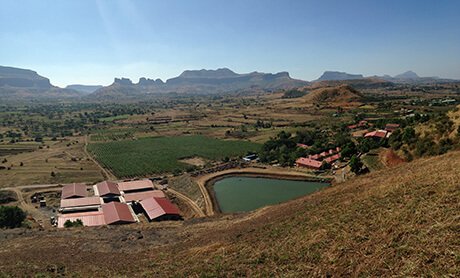
Village Talwade, Trimbak, Nasik
Maharashtra,India.
Phone - +91-9822770727
E-mail - yoga@yogapoint.com or yogapoint108@gmail.com