


Yoga Poses - Beginners
Asana For Beginners
Basic Movements (Yoga Positions or Postures or Asanas)
Basic Movements (Yoga Positions or Postures or Asanas)
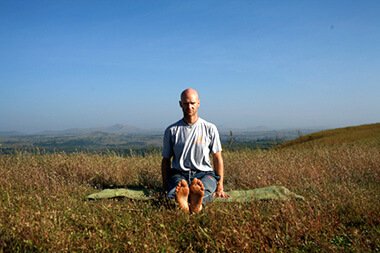
These movements are very useful to beginners, who want to start doing yoga but don't have any experience of yoga or any other exercise.
There are several joints in our body, which needs lubrication and movements. The food we consume supplies the lubrication and Yoga and other activities provide the movements. In our regular life some of these joints are overused and some are rarely used which may create problems at later stage in your life. To help these joints maintain their healthy condition Basic Movements are necessary also they are useful to prepare your body to take up Yoga.
Click here for Asana For Beginners
Below 12 years of age Yoga postures should not be practiced for long duration and asanas are to be maintained for very short duration.
Every day you should practice Yoga for at least 30 to 45 minutes to get maximum results.
The best suited time to practice is early morning hours, but it can be practiced in the afternoon after following food restrictions.
Food restrictions - stomach should be empty while practicing, that is you should consume solid food 3.5 hours before practicing and liquid 1 hour before.
Place should be spacious, clean, airy, bright and away from disturbances.
Yoga should not be practiced on bare floor but keep mat or carpet below.
Clothes should be comfortable, loose, clean. Undergarments are necessary.
Yoga prefers vegetarian diet. But avoid spicy and hot diet as much as possible.
Women should not practice Yoga during Pregnancy and menstruation.
One should have faith in Yoga and what he is doing.
Asana system is the 3rd in Ashtanga yoga, yogasana help achieve physical health, control over mind and power of concentration.
Patanjali has described Yogasana as "Sthir Sukham Asanam", which means a posture that is stable and pleasant. A more broad definition of Yogasana according to Patanjali is "Tatodwanabhighatah" which means practice of Yogasana leads to disappearance of duality of cold-hot, sadness-joy, happiness-sorrow and so on.
Yoga is different from exercise as it doesn't involve speedy movements, but instead very slow and steady movements.
Yoga helps achieve relaxation which reduces stress & strain.
Very few calories are consumed during Yogasana practice and metabolism rate of the body also drops which means reduced Aging Process.
Less food is required as digestive power is increased.
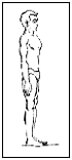
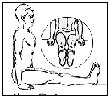
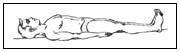
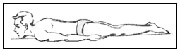
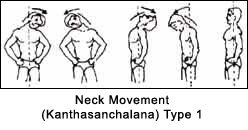
Aim - To increase the flexibility and stamina of neck muscles.
Precaution - People with neck problems like spondilytis should avoid forward bending.
Procedure - Sit in the Vajrasana Position, keep your neck straight, then slowly but without jerk start rotating neck clockwise from left shoulder to backwards then to the right shoulder and to front. Repeat this in anticlockwise direction starting from right shoulder.
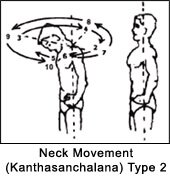
Aim - To increase the flexibility and stamina of neck muscles.
Precaution - People with neck problems like spondilytis should avoid forward bending.
Procedure - Sit in the Vajrasana Position, keep your neck straight, then slowly but without jerk start rotating neck clockwise from left shoulder to backwards then to the right shoulder and to front. Repeat this in anticlockwise direction starting from right shoulder.
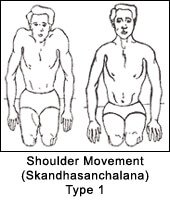
Aim - To increase the flexibility and stamina of neck muscles.
Precaution - No specific precautions.
Procedure - Sit in the Vajrasana Position, keep your body straight, with arms by side. Then slowly but without jerk lift your both shoulders upwards as much as possible near to ears, back to normal position.
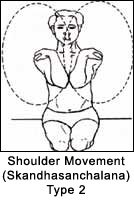
Aim - To increase the flexibility and stamina of shoulder and back muscles.
Procedure - Sit in the Vajrasana position, keep your body straight, fold you hands and place left fist on left shoulder and right fist on right shoulder, bring both your elbows together near chest, then slowly but without jerk rotate both these arms in opposite direction, (left arm anticlockwise and right arm clockwise) Repeat this in opposite direction (right arm anticlockwise and left arm clockwise).
Benefits - This posture is useful for people with back problems.
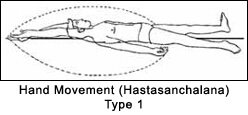
Aim - To increase the flexibility and stamina of hand & shoulder muscles.
Precaution - If you feel strain while lifting your hands above ground then do this with your hands resting on ground.
Procedure - Relax in Shavasana position, keep your hands 6 inches away from your body, legs separated with 12 inch distance between them, lift your hands 1 to 1.5 inch above ground and slowly rotate them towards head without bending elbows, keep the hands parallel to the ground till both the palms meet, place left palm on right palm and stretch hands upwards and legs downwards for 5 to 10 seconds, then slowly but without jerk rotate both the hands back to the normal position via the same path.
Benefits - This posture is useful in increasing the strength of neck, shoulders and the stretching helps retain normal posture.
Aim - To increase the flexibility and stamina of hand & shoulder muscles.
Precaution - do not bend elbows while doing this.
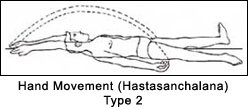
Procedure - Relax in Shavasana position, keep your hands 6 inches away from your body, legs separated with 12 inch distance between them, raise your hands above ground and slowly take them towards head without bending elbows, place both hands on the ground, stretch hands upwards and legs downwards for 5 to 10 seconds. Then slowly but without jerk bring both the hands back to the normal position via the same path.
Benefits - This posture is useful in increasing the strength of neck, shoulders and hands, the stretching helps retain normal posture.
Aim - To increase the flexibility and stamina of hand & shoulder muscles.
Precaution - do not bend elbows while doing this.
Procedure - Relax in Shavasana position, keep your hands 6 inches away from your body, legs separated with 12 inch distance between them, raise your hands above ground and slowly take them towards head without bending elbows, place both hands on the ground, stretch hands upwards and legs downwards for 5 to 10 seconds. Then slowly but without jerk bring both the hands back to the normal position via the same path.
Benefits - This posture is useful in increasing the strength of neck, shoulders and hands, the stretching helps retain normal posture.
Aim - To increase the flexibility and stamina of hand & shoulder muscles.
Precaution - If you feel strain while lifting your hands above ground then do this with your hands resting on ground. The movements should be slow and continuous.
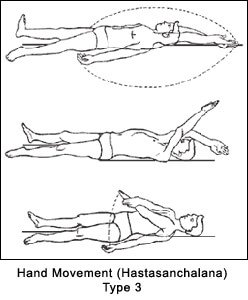
Procedure - Relax in Shavasana position, keep your hands 6 inches away from your body, legs separated with 12 inch distance between them, lift your hands 1 to 1.5 inch above ground and slowly rotate them towards head without bending elbows, keep the hands parallel to the ground till both forearms cross, in this same cross position raise the arms above and on to the stomach, then slowly bring both the hands back to the normal position.
Benefits - This posture is useful in increasing the strength of neck, shoulders and the stretching helps retain normal posture.
Aim - To increase the flexibility and stamina of legs & hip muscles.
Precaution - The movements should be slow & continuous.
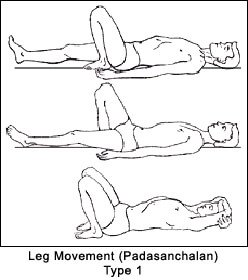
Procedure - Relax in Supine position, keep your hands around head rotating them side ways, then lift your left leg and bring it near to the hip, repeat this procedure for the right leg. Then slowly bring both the hands back to the normal position
Benefits - This helps development of the leg muscles and hip joints.
Aim - To increase the flexibility and strength of legs & hip muscles.
Precaution - The movements should be slow & continuous. Do not bend the knees.
Procedure - Relax in Supine position, keep your hands close to your body, then lift your left leg 30 to 40 degrees above ground level and rotate it in the clockwise direction without bending knees, repeat this procedure for the right leg.
Benefits - This helps leg muscles and hip joints.
Aim - To increase the flexibility and stamina of legs & hip muscles
Precaution - The movements should be slow & continuous. Do not bend the knees.
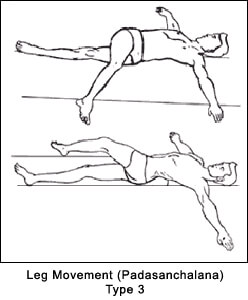
Procedure - Relax in Supine position, Move your hands around and place them at shoulder height, parallel to the ground, then lift your left leg and turn it to the right side as far as possible touching the ground. Repeat this procedure for the right leg. Then slowly bring both the hands back to the normal position.
Benefits - This helps leg muscles and hip joints.
Aim - To increase the flexibility and stamina of neck muscles.
Precaution - People with neck problems like spondilytis should avoid forward bending.
Procedure - Sit in the Vajrasana Position, keep your neck straight, then slowly but without jerk start rotating neck clockwise from left shoulder to backwards then to the right shoulder and to front. Repeat this in anticlockwise direction starting from right shoulder.
Benefits - This helps knee joints and hip joints.
Phone - +91-9822770727
E-mail - yoga@yogapoint.com or yogapoint108@gmail.com
Yoga Vidya Dham, Kaivalya Nagari,
College Road, Nashik - 422005.
Maharashtra, India.
Phone - +91-9822770727 (for courses in ENGLISH)
+91-253-2318090 (For courses, in HINDI or MARATHI)
(Please call during 9.00 AM to 5 PM Indian Time)
E-mail - yoga@yogapoint.co or yogapoint108@gmail.com
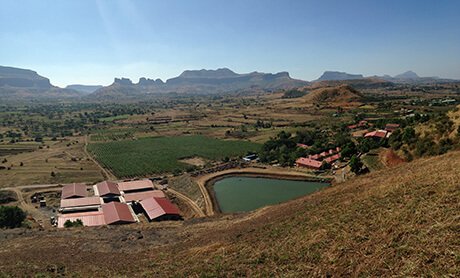
Village Talwade, Trimbak, Nasik
Maharashtra,India.
Phone - +91-9822770727
E-mail - yoga@yogapoint.com or yogapoint108@gmail.com